
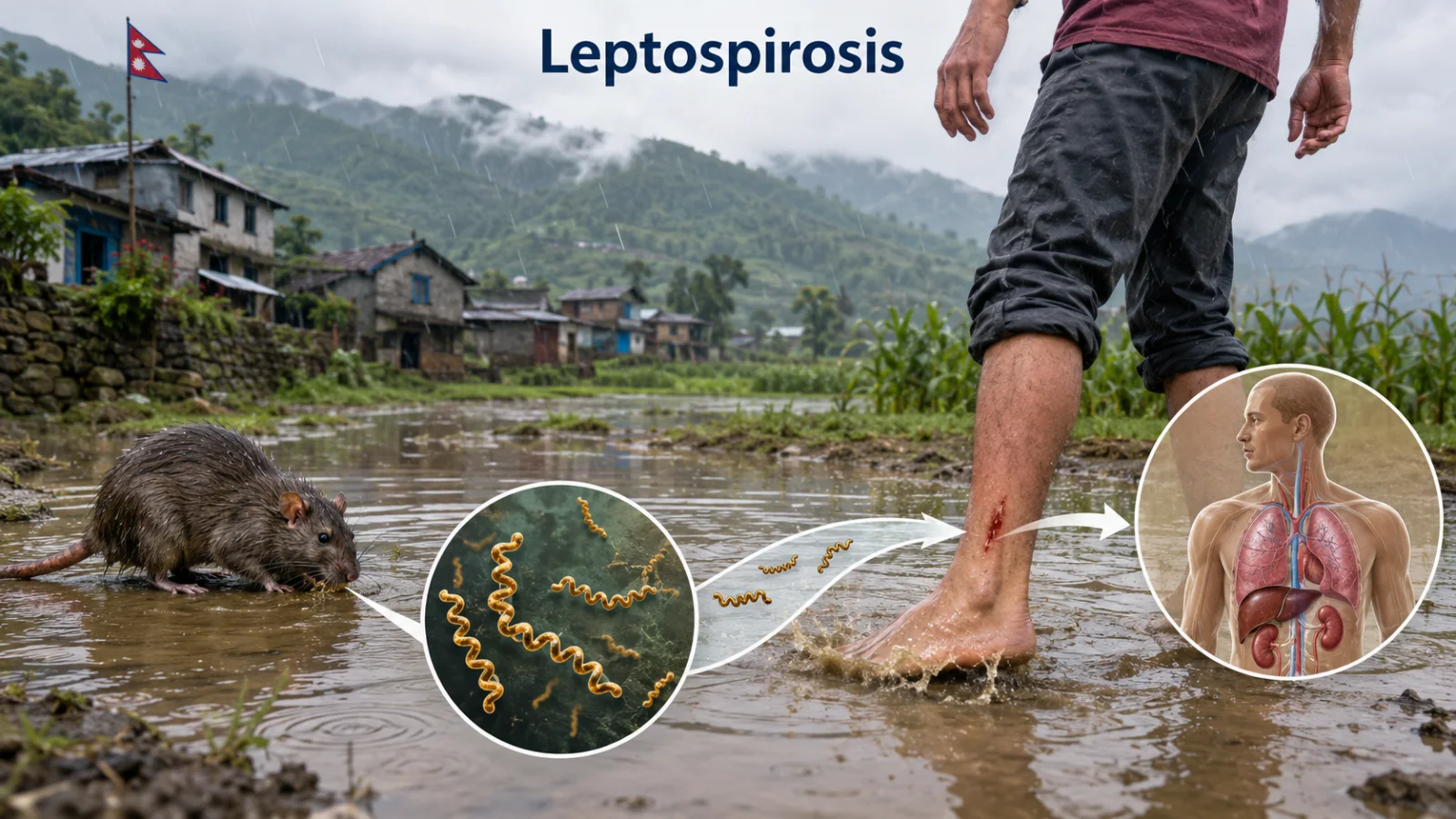
Leptospirosis
Leptospirosis is a bacterial infection caused by Leptospira. It spreads from infected animals to humans, usually through water, mud or soil contaminated with animal urine. Rats, cattle, pigs, dogs and other mammals can carry the bacteria. People may become infected when contaminated water or mud touches broken skin, the eyes, nose or mouth, or less commonly by drinking contaminated water.
In Nepal, leptospirosis should be considered in people with unexplained fever after exposure to floodwater, muddy fields, drains, sewage, animal urine, farming areas or stagnant water, especially during or after the monsoon. Nepal's EDCD infectious disease guidance lists exposure to freshwater or moist soil contaminated by infected animal urine as a major risk factor and notes that leptospirosis can resemble illnesses such as influenza, typhoid fever, pneumonia, viral hepatitis and meningitis.
Symptoms
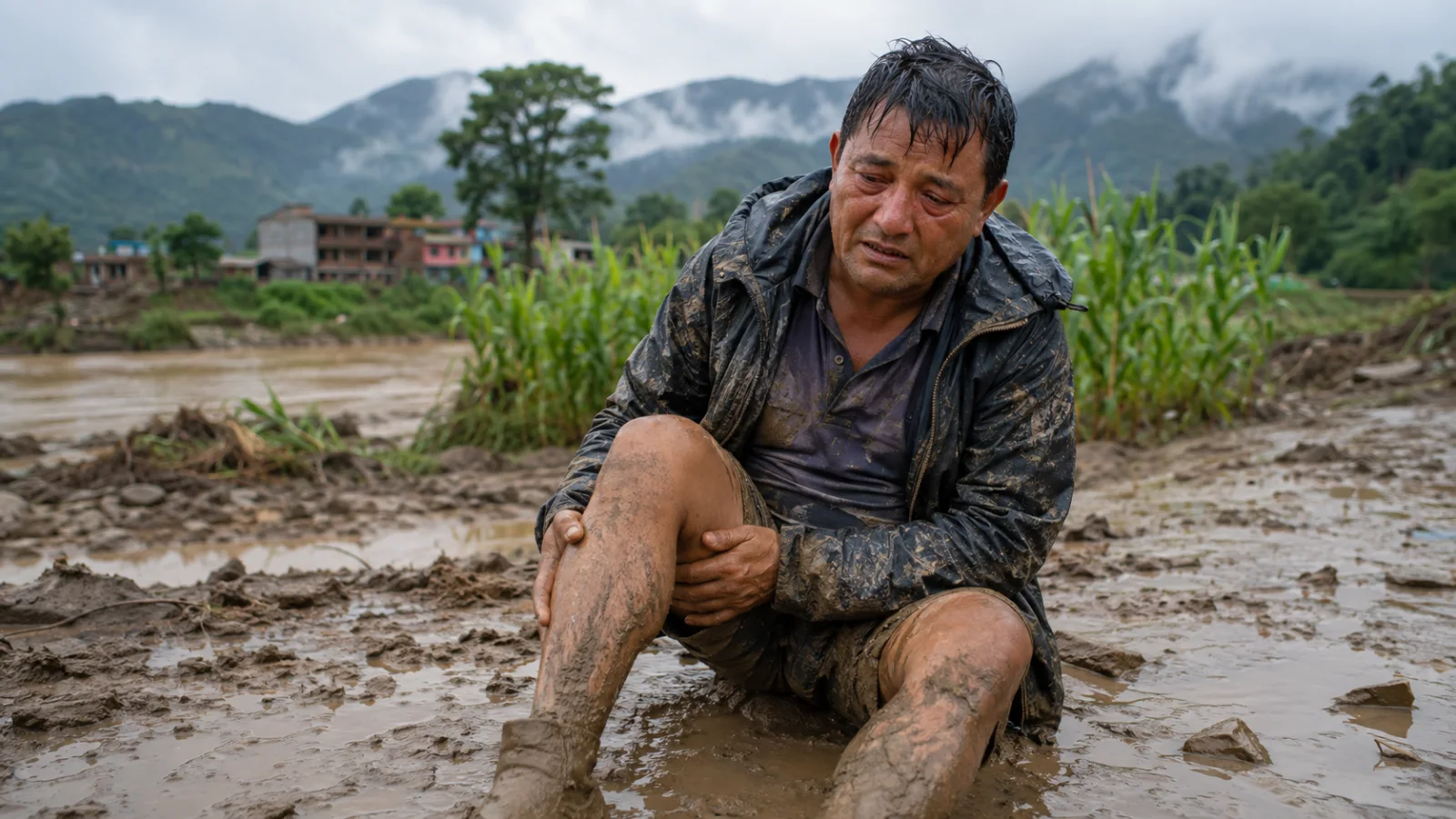
Symptoms usually begin several days to a few weeks after exposure. They can be mild, but some people become seriously ill.
Possible symptoms include:
Sudden fever or chills
Severe headache
Muscle pain, especially in the calves and lower back
Red eyes without pus
Nausea, vomiting or diarrhoea
Cough
Tiredness or marked weakness
Loss of appetite
Rash in some cases
Jaundice, meaning yellow eyes or skin
Dark urine or reduced urination
Leptospirosis can be difficult to recognise because early symptoms overlap with dengue, scrub typhus, malaria, typhoid fever, viral hepatitis, influenza, COVID-19 and other infections. Symptoms alone cannot confirm the diagnosis.
Red flags
Go to the nearest hospital urgently if fever occurs with:
Yellow eyes or skin
Very little urine or no urine
Severe weakness, fainting, confusion or difficulty waking
Severe headache with neck stiffness, repeated vomiting or light sensitivity
Breathlessness, chest pain or coughing blood
Severe abdominal pain or a swollen, very tender abdomen
Bleeding from the gums, nose, vomit, stool or urine
Widespread bruising or tiny red-purple spots on the skin
Cold hands and feet, fast breathing, rapid pulse or signs of shock
Repeated vomiting or inability to keep fluids down
Pregnancy with fever, jaundice, severe weakness or reduced urine
Known kidney disease, liver disease, diabetes, HIV or weakened immunity
Severe leptospirosis can cause kidney failure, liver failure, meningitis, breathing problems, bleeding in the lungs and death if treatment is delayed. Severe disease with jaundice and kidney involvement is sometimes called Weil's disease.
Self-care
Leptospirosis should not be managed with home remedies alone if there is fever after floodwater, mud, sewage or animal-urine exposure. Arrange medical assessment early, because antibiotics are more effective when started promptly.
To reduce risk:
Avoid walking or working barefoot in floodwater, muddy fields, drains or stagnant water.
Wear waterproof boots, gloves and protective clothing when working in wet soil, farms, drains, sewers or animal areas.
Cover cuts and wounds with waterproof dressings.
Wash skin with soap and safe water after exposure to mud, floodwater or animal urine.
Avoid swimming or bathing in water that may be contaminated with sewage or animal urine.
Drink boiled, filtered or properly treated water when safety is uncertain.
Keep food covered and away from rats and animal waste.
Control rodents around the home where practical.
Drain stagnant water around homes, animal sheds and farms where possible.
Do not ignore fever after floodwater or farming exposure. Do not take leftover antibiotics or stop prescribed antibiotics early. Do not apply chemicals, kerosene or herbal products to cuts or wounds.
Treatment
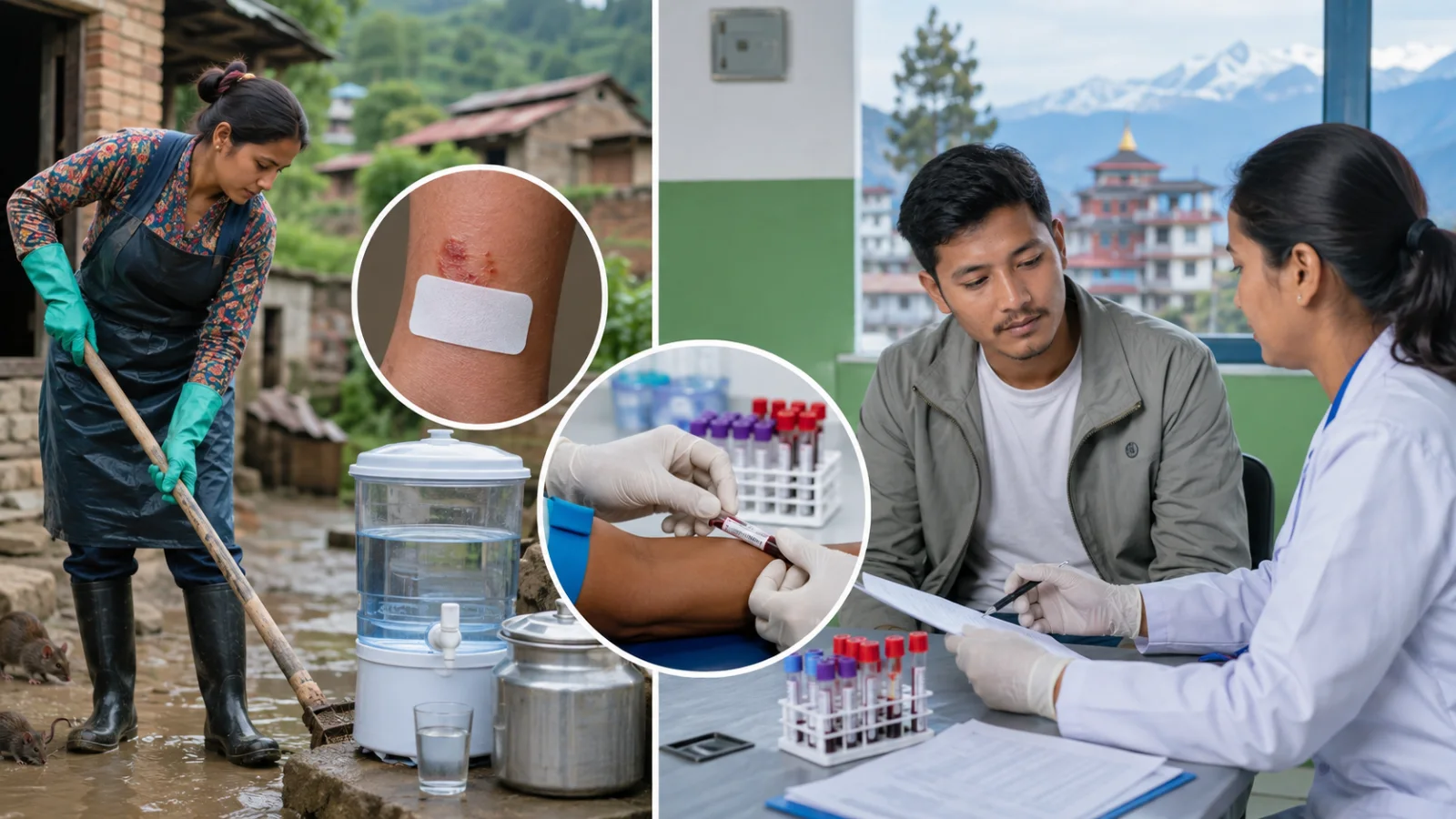
Leptospirosis is treated with antibiotics. Mild cases may be treated with oral antibiotics after clinical assessment, while severe illness may require hospital admission and intravenous antibiotics. Early treatment may reduce severity and duration of illness.
A healthcare professional may arrange:
Blood tests for infection and inflammation
Kidney function tests
Liver function tests and bilirubin
Blood clotting tests if bleeding or severe illness is suspected
Urine test
Leptospirosis PCR or antibody testing, depending on timing and availability
Tests for dengue, malaria, scrub typhus, typhoid, viral hepatitis or other causes of fever
Chest X-ray or oxygen assessment if there is cough, breathlessness or chest pain
Severe disease may need intravenous fluids, oxygen, close monitoring, treatment for bleeding, dialysis for kidney failure, or breathing support in an intensive-care setting. CDC notes that testing choice depends on the timing of symptoms and that untreated disease can progress to kidney failure, jaundice, respiratory failure, liver failure and meningitis.
Questions to ask your doctor
Could this fever be leptospirosis, dengue, scrub typhus, typhoid, malaria or hepatitis?
Which exposure history makes leptospirosis more likely?
Do I need blood, urine or leptospirosis-specific tests?
Are my kidney and liver tests normal?
Should antibiotics start before all test results return?
Do I need hospital admission or IV antibiotics?
Which symptoms mean I should return to hospital immediately?
How can I avoid leptospirosis during farming, monsoon or flood cleanup?
Do my animals or local water sources need public-health attention?
Should this case be reported to local health authorities?
Nepal pathway
In Nepal, start with your nearest health post, PHC, clinic, or hospital if symptoms are worrying, severe, worsening, or not improving. Take previous prescriptions, test reports, allergy information, and current medicines with you. Seek urgent care immediately if there are red flag symptoms.
Disclaimer
This is general health information only and does not replace medical advice, diagnosis, treatment, or emergency care.
Help improve this guide
Spotted an error or want to contact us about this guide? Send a message to the HamroSwasthya team.