
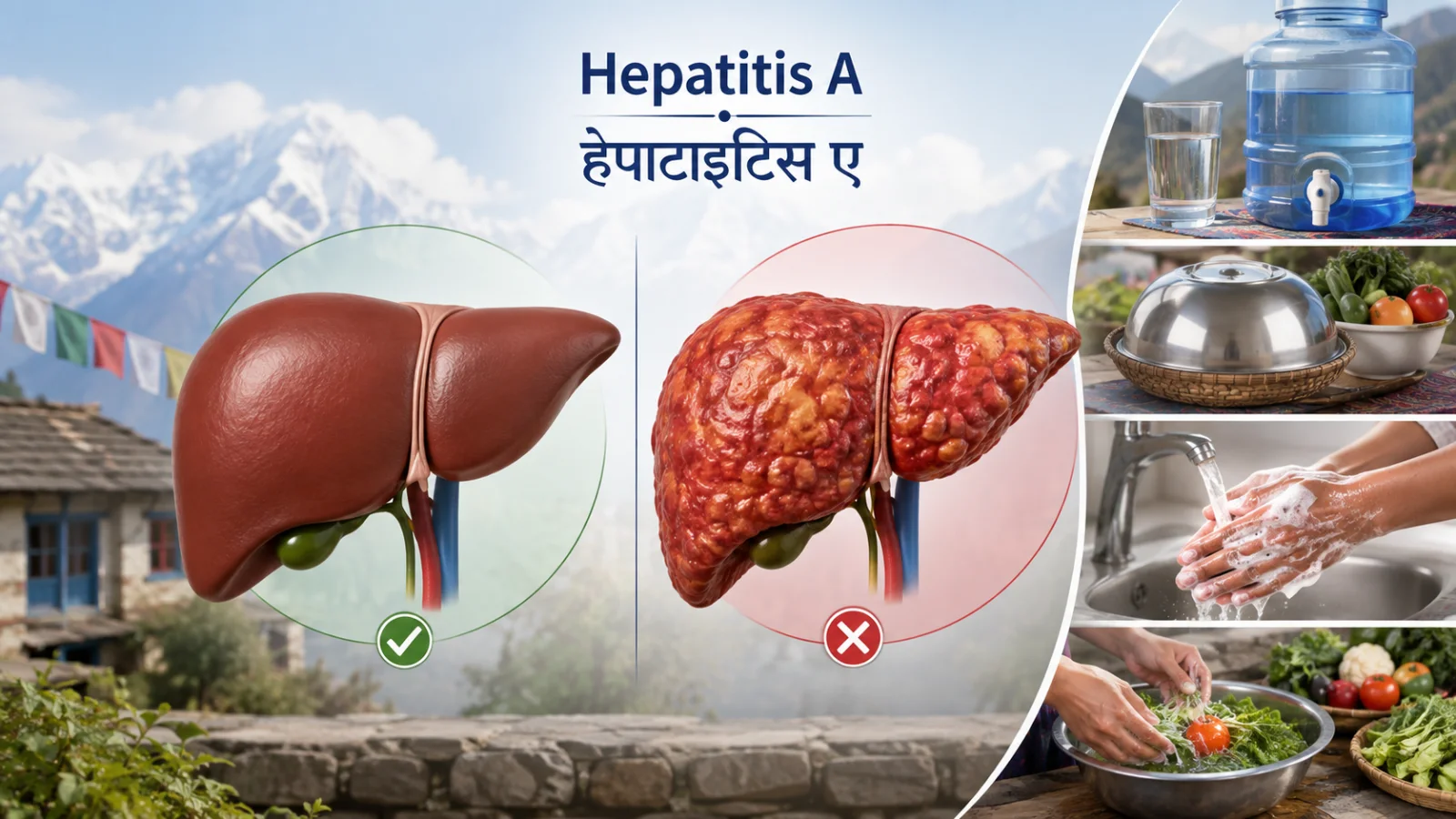
Hepatitis A
Hepatitis A is a viral infection that affects the liver. It spreads mainly when someone eats food or drinks water contaminated with the stool of an infected person. It can also spread through close personal contact with an infected person, especially where handwashing, sanitation or food hygiene is poor.
Hepatitis A is different from hepatitis B and hepatitis C. It does not usually cause chronic liver disease, and most people recover completely. However, it can cause weeks or months of illness, and rarely it can lead to acute liver failure, especially in older adults or people who already have liver disease.
In Nepal, hepatitis A risk is linked to contaminated water, unsafe food, inadequate sanitation, crowding and outbreaks of jaundice or acute hepatitis. Prevention depends on safe drinking water, good hand hygiene, safe food preparation, sanitation and vaccination where appropriate.
Symptoms

Symptoms usually appear several weeks after infection. Some people, especially young children, may have no symptoms or only mild illness. Adults are more likely to feel unwell.
Possible symptoms include:
Tiredness or weakness
Loss of appetite
Nausea or vomiting
Pain or discomfort in the upper right side of the abdomen
Dark urine
Pale or grey-coloured stool
Yellowing of the eyes or skin, called jaundice
Itchy skin
Joint or body aches
Diarrhoea or stomach upset
Jaundice can also be caused by hepatitis E, hepatitis B, gallstones, liver disease, malaria, leptospirosis, typhoid, medicines, alcohol-related liver injury and other conditions. Symptoms alone cannot confirm hepatitis A.
Red flags
Go to the nearest hospital urgently if someone with suspected hepatitis or jaundice has:
Severe drowsiness, confusion, unusual behaviour or difficulty waking
Repeated vomiting or inability to keep fluids down
Severe abdominal pain or a swollen, very tender abdomen
Bleeding from the gums, nose, vomit or stool, or easy bruising
Very dark urine with very little urine output
Yellowing that is rapidly worsening
Severe weakness, fainting or collapse
Fast breathing, severe dehydration or signs of shock
High fever, stiff neck, severe headache or rash
Pregnancy with jaundice or significant illness
Known chronic liver disease, hepatitis B or C, HIV, heavy alcohol use or weakened immunity
Confusion, marked sleepiness, bleeding, severe vomiting or worsening jaundice can suggest serious liver involvement and need urgent assessment.
Self-care
Hepatitis A cannot be cured with home remedies, but mild illness can often be supported at home after medical assessment, provided there are no red flags.
Rest while symptoms are significant.
Drink enough safe fluids to prevent dehydration.
Eat small, simple meals if appetite is low.
Avoid alcohol completely until a healthcare professional confirms recovery.
Avoid unnecessary medicines and herbal remedies because some can harm the liver.
Ask a healthcare professional before taking paracetamol, painkillers, antibiotics or anti-nausea medicines.
Wash hands carefully with soap and safe water after using the toilet and before preparing food.
Avoid preparing food for others while infectious.
Use a separate towel if possible.
Clean toilets, taps and frequently touched surfaces regularly.
Do not share toothbrushes, razors or items that may be contaminated with body fluids.
Do not donate blood while unwell or until advised it is safe.
If someone in the household has hepatitis A, close contacts may need advice about vaccination or immune globulin, especially if exposure was recent. CDC notes that post-exposure prevention may be recommended depending on age, health and timing of exposure.
Treatment
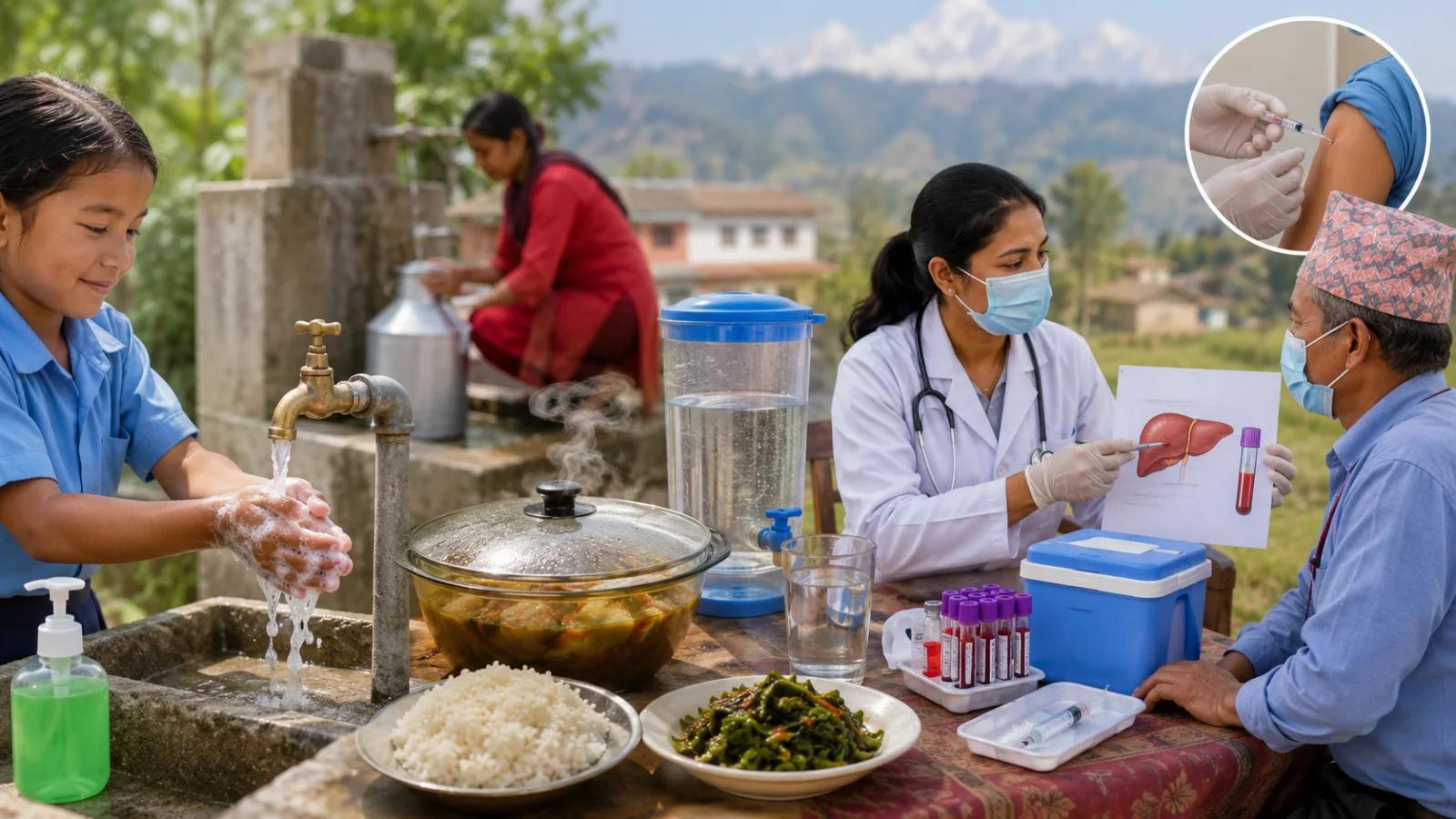
There is no specific antiviral medicine that cures hepatitis A. Treatment is supportive and focuses on rest, fluids, nutrition, avoiding liver-harming substances and monitoring for complications. Most people recover without long-term liver damage.
A healthcare professional may arrange:
Liver function blood tests
Bilirubin level
Blood clotting tests if illness is severe
Tests for hepatitis A IgM antibody
Tests for hepatitis B, hepatitis C or hepatitis E when relevant
Full blood count, kidney function or other tests if dehydration or another infection is suspected
Ultrasound if gallstones or bile-duct blockage is suspected
Hospital treatment may be needed for severe dehydration, persistent vomiting, bleeding problems, confusion, acute liver failure, pregnancy with severe illness, or significant underlying liver disease.
Prevention is important. A safe and effective hepatitis A vaccine is available. It may be recommended for travellers to higher-risk areas, people with chronic liver disease, certain occupational risks, outbreak settings, and other higher-risk groups depending on local guidance and vaccine availability.
Questions to ask your doctor
Is this likely to be hepatitis A, hepatitis E, hepatitis B, gallstones or another cause of jaundice?
Which blood tests are needed to confirm the diagnosis?
Are my liver tests improving or worsening?
Do I need testing for hepatitis B, hepatitis C or hepatitis E?
Which medicines should I avoid while my liver is inflamed?
When is it safe to return to work, school or food preparation?
How can I reduce the risk of spreading infection to my family?
Do household contacts need vaccination or other preventive treatment?
Should I receive hepatitis A vaccine in the future?
Which symptoms mean I should go to hospital urgently?
Nepal pathway
In Nepal, start with your nearest health post, PHC, clinic, or hospital if symptoms are worrying, severe, worsening, or not improving. Take previous prescriptions, test reports, allergy information, and current medicines with you. Seek urgent care immediately if there are red flag symptoms.
Disclaimer
This is general health information only and does not replace medical advice, diagnosis, treatment, or emergency care.
Help improve this guide
Spotted an error or want to contact us about this guide? Send a message to the HamroSwasthya team.