
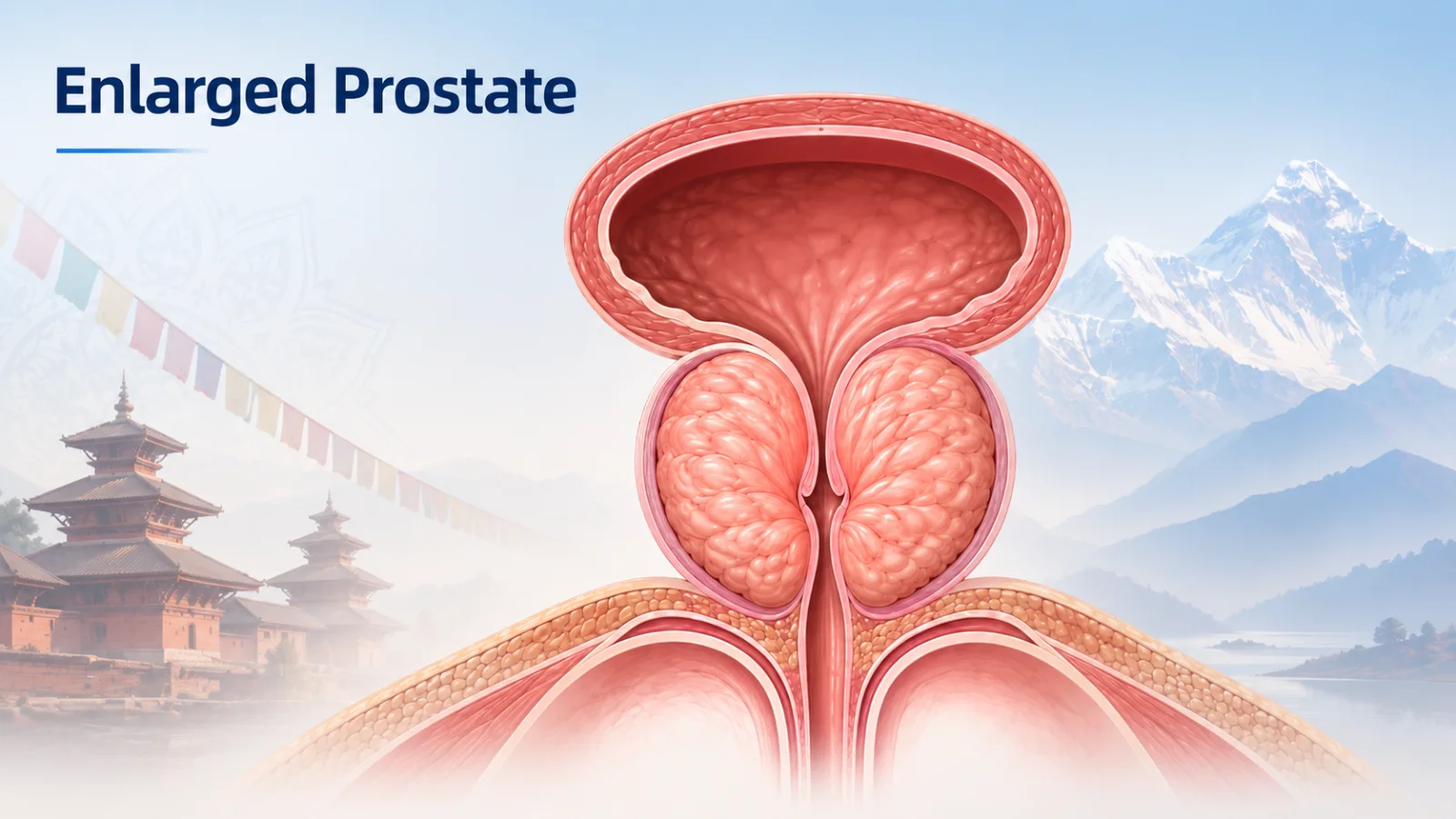
Enlarged prostate
An enlarged prostate usually refers to benign prostate enlargement (BPE), also called benign prostatic hyperplasia (BPH). The prostate is a small gland below the bladder that surrounds the tube carrying urine out of the body. As it enlarges, it can press on this tube and make urination more difficult.
Benign prostate enlargement is not prostate cancer, and having it does not itself increase the risk of prostate cancer. However, enlarged prostate, prostate cancer, infection, bladder problems and other conditions can cause similar urinary symptoms, so new or persistent symptoms should be assessed rather than self-diagnosed.
Symptoms
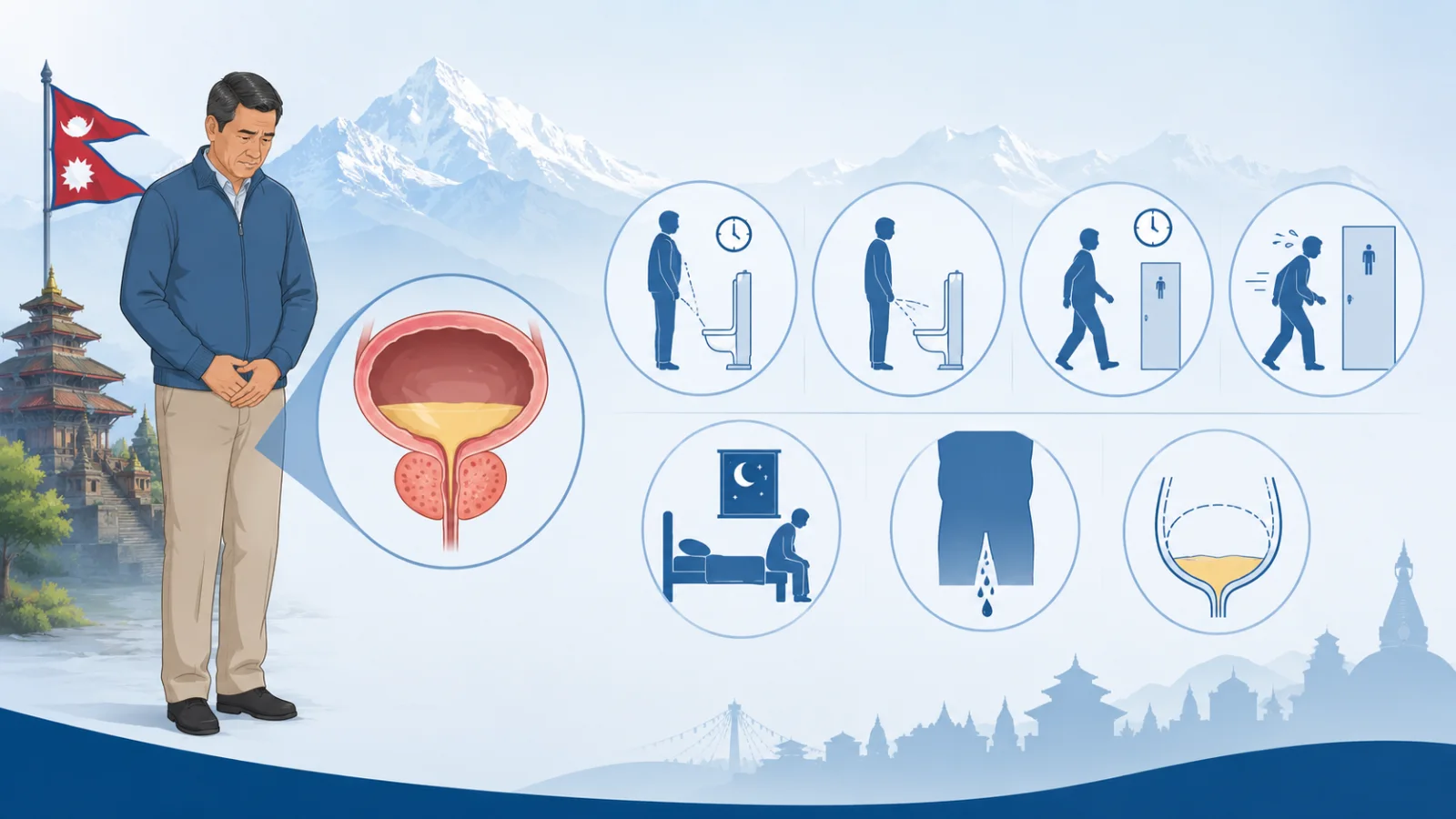
Possible symptoms include:
Difficulty starting to urinate
Waiting or straining before urine begins to flow
A weak or slow urine stream
Urine flow stopping and starting
Taking longer than usual to empty the bladder
Dribbling after finishing
Feeling that the bladder has not emptied completely
Needing to urinate more often
Needing to urinate urgently
Waking several times during the night to urinate
Leakage before reaching the toilet
Occasionally being unable to pass urine
The size of the prostate does not always match the severity of symptoms. A relatively small enlargement may cause significant obstruction, while some people with a large prostate have few symptoms. Lower urinary-tract symptoms may also come from the bladder, urethra, infection, medicines, diabetes or neurological disease.
Red flags
Go to the nearest hospital urgently if you:
Cannot pass urine despite having a painful, full or swollen lower abdomen
Pass blood in the urine with clots or cannot urinate because of bleeding
Have fever, shivering, burning urination, back or side pain and feel seriously unwell
Develop severe lower-abdominal, pelvic or back pain
Become confused, very weak, faint or severely unwell
Pass very little urine together with swelling, vomiting or breathlessness
Complete inability to urinate is called acute urinary retention. It requires urgent treatment to drain the bladder and assess the cause.
Arrange prompt medical assessment if:
You see blood in the urine, even once
Urinary symptoms are getting progressively worse
You have recurrent urinary infections
You have unexplained weight loss, persistent bone or back pain, or marked tiredness
You have new loss of bladder control, leg weakness or numbness around the genitals or buttocks
You have pain during urination, ejaculation or persistent pelvic pain
You have previously had prostate, bladder or urinary-tract surgery
Blood in the urine, pain, recurrent infection and chronic urinary retention may require specialist investigation rather than routine treatment for prostate enlargement alone.
Self-care
An enlarged prostate cannot always be managed through home measures alone. However, if a healthcare professional has assessed your symptoms and confirmed that immediate treatment is unnecessary, the following measures may help:
Reduce drinks for a few hours before bedtime or long journeys, while continuing to drink enough overall.
Limit tea, coffee, cola, energy drinks and alcohol if they worsen urgency or frequent urination.
Avoid drinking a large amount at one time; spread fluids across the day.
Take time to empty the bladder without straining.
After finishing, wait briefly and try to pass urine again if you still feel full.
Avoid constipation by eating enough fibre, drinking appropriately and staying active.
Keep a record of how often you urinate, night-time urination, urgency, leakage and fluid intake.
Review medicines with a pharmacist or clinician, because some cold remedies, antihistamines, antidepressants and water tablets may worsen urinary symptoms.
Maintain regular physical activity and a healthy weight.
Seek early assessment if symptoms worsen rather than repeatedly using unregulated herbal or "prostate" products.
Do not deliberately avoid fluids throughout the day, as this may contribute to dehydration, constipation and urinary infection. Do not use another person's prostate medicine or start herbal remedies without checking for interactions and side effects.
Treatment
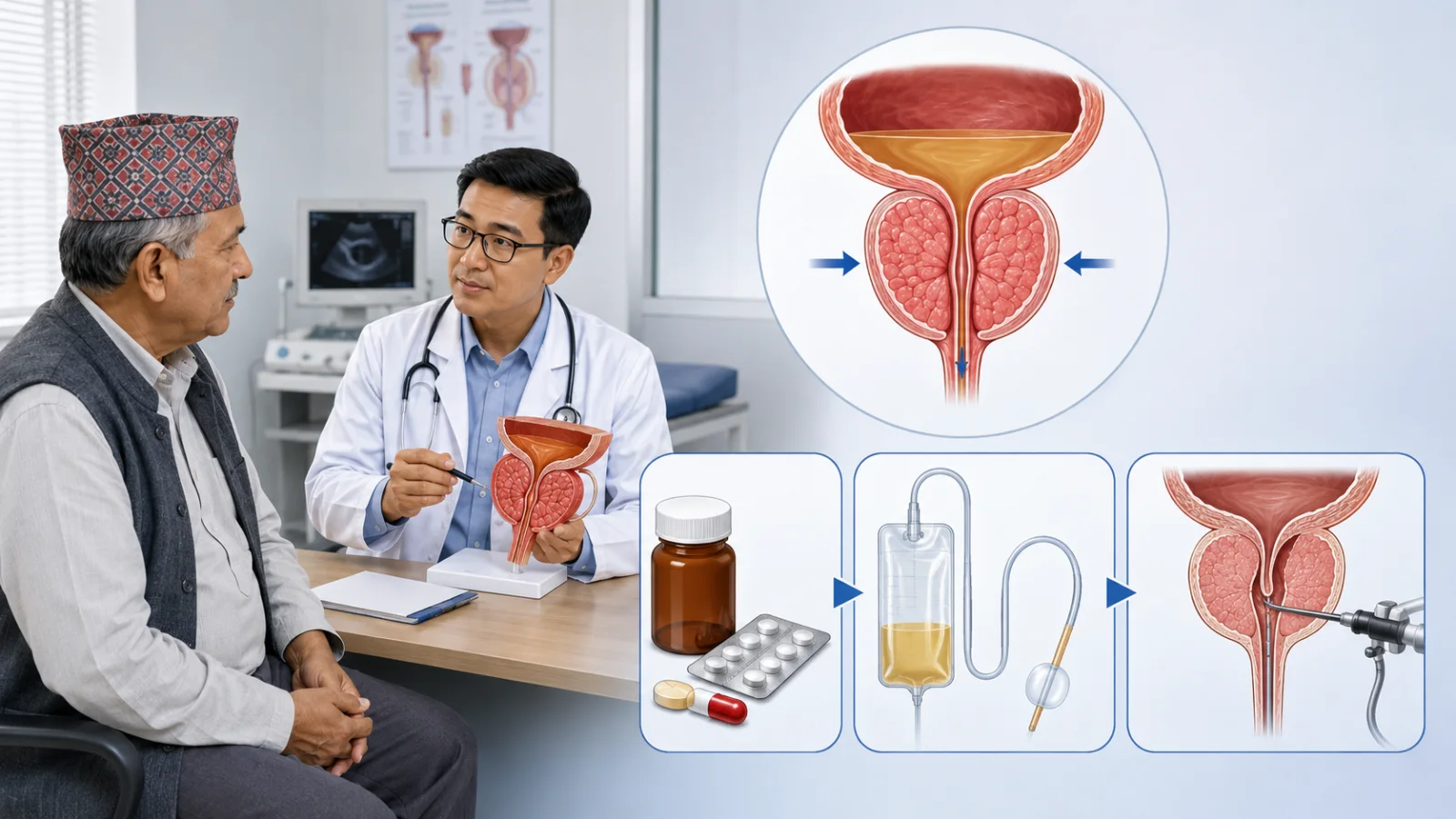
Assessment may include questions about urinary symptoms and their impact, a urine test, examination of the abdomen and external genital area, and a rectal examination to assess the prostate. A clinician may also discuss a PSA blood test, explaining its possible benefits and limitations. Kidney-function testing is generally arranged when there are concerns such as urinary retention, recurrent infection, kidney stones or possible kidney impairment.
Not everyone needs immediate treatment. Mild symptoms that are not troublesome may be monitored with lifestyle advice and follow-up. Treatment depends on symptom severity, prostate size, complications, other illnesses and personal preferences.
Treatment options may include:
Medicines that relax the prostate and bladder outlet: These can improve urine flow relatively quickly but may cause dizziness, low blood pressure or changes in ejaculation.
Medicines that gradually shrink the prostate: These may be suitable when the prostate is significantly enlarged. They take longer to work and may affect sexual function.
Combination treatment: Some people benefit from more than one type of medicine.
Treatment for urgency or overactive-bladder symptoms: This may be considered after assessing whether the bladder is emptying safely.
A urinary catheter: This may be needed temporarily or longer term if the bladder cannot empty.
Procedures or surgery: These remove, shrink or hold back prostate tissue that is obstructing urine flow. Options include operations through the urethra, laser procedures, water-vapour treatment, implants and other minimally invasive techniques.
A procedure may be considered when symptoms remain severe despite medicines, urinary retention occurs, infections repeatedly return, bladder stones develop, kidney function is affected or the person prefers a procedural option after discussing benefits and risks.
Procedures differ in recovery time and possible effects on bleeding, ejaculation, erections, continence and the likelihood of needing further treatment. A urology specialist should explain which options are available and suitable.
Questions to ask your doctor
Are my urinary symptoms caused by an enlarged prostate or another condition?
Does my prostate feel enlarged or abnormal?
Do I need a urine test, kidney test or PSA blood test?
What are the benefits and limitations of PSA testing?
Is my bladder emptying properly?
Could any of my medicines be worsening the symptoms?
Can my symptoms be monitored without immediate medicine?
Which medicine is most suitable, and what side effects should I watch for?
Could treatment affect erections or ejaculation?
When would a catheter, procedure or surgery be considered?
Which treatment options are available locally?
Which symptoms mean I should go to hospital urgently?
Nepal pathway
In Nepal, start with your nearest health post, PHC, clinic, or hospital if symptoms are worrying, severe, worsening, or not improving. Take previous prescriptions, test reports, allergy information, and current medicines with you. Seek urgent care immediately if there are red flag symptoms.
Disclaimer
This is general health information only and does not replace medical advice, diagnosis, treatment, or emergency care.
Help improve this guide
Spotted an error or want to contact us about this guide? Send a message to the HamroSwasthya team.